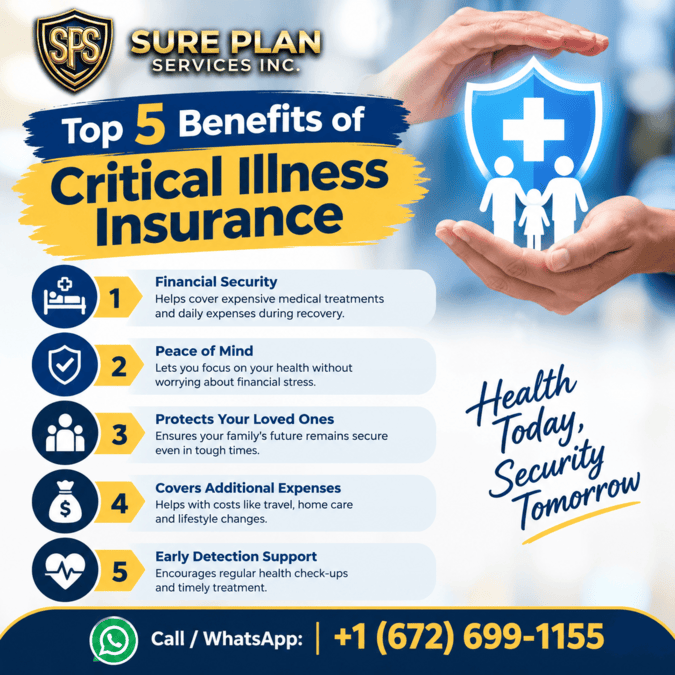
Unexpected health problems can create significant financial challenges for individuals and families. Serious illnesses such as cancer, heart attacks, and strokes may require expensive medical treatment, extended recovery periods, and time away from work. Critical illness insurance can help provide financial support during these difficult times. Sure Plan Services understands the importance of financial preparedness and helping individuals explore insurance options that support their long-term financial well-being.
What Is Critical Illness Insurance?
Critical illness insurance is a type of insurance policy that may provide a lump-sum payment if the policyholder is diagnosed with a covered serious illness and meets the policy’s terms and conditions. Unlike traditional health insurance, which generally helps cover eligible medical expenses, critical illness insurance can provide money that may be used for various financial needs, depending on the policy.
Here are the top five benefits of critical illness insurance and why it may be a valuable part of your financial protection strategy.
1. Financial Support During Serious Illness
A serious illness can affect more than your physical health. It may also create unexpected expenses, including treatment-related costs, transportation, rehabilitation, and household bills. Critical illness insurance can provide a financial cushion when you need it most.
The benefit payment can help eligible policyholders manage expenses while focusing on treatment and recovery. The amount payable depends on the coverage selected and the terms of the policy.
2. Helps Replace Lost Income
Recovering from a critical illness may require time away from work. For employees, this can mean reduced earnings, while self-employed individuals may experience interruptions in their business income.
A critical illness insurance payout can help cover everyday expenses, such as rent or mortgage payments, groceries, utilities, and other financial obligations. This support can help reduce the financial pressure associated with an extended recovery period.
3. Flexibility in Using the Benefit
One of the key advantages of critical illness insurance is the flexibility that a lump-sum benefit may offer. Depending on the policy, the money can generally be used for different financial needs rather than being limited to specific hospital bills.
For example, the payment may help with:
- Household expenses and monthly bills
- Travel for medical appointments
- Rehabilitation and recovery-related costs
- Outstanding debts and loan payments
- Additional support for family members
Always review your policy to understand the conditions under which benefits are paid.
4. Protects Your Savings and Financial Goals
Unexpected medical challenges can put pressure on savings that were intended for retirement, education, homeownership, or other long-term goals. Without adequate financial protection, families may need to use emergency funds or withdraw from investments to manage expenses.
Critical illness insurance may help reduce the need to rely entirely on personal savings during a covered illness. It can complement an emergency fund, health insurance, disability insurance, and other financial protection measures.
5. Greater Financial Confidence for You and Your Family
Knowing that you have an additional layer of financial protection can provide reassurance to you and your loved ones. While insurance cannot prevent an illness, suitable coverage may help you prepare financially for some of the challenges that can arise after a serious diagnosis.
Choosing appropriate coverage can be an important step toward building a more resilient financial plan and protecting your family’s financial stability.
How to Choose the Right Critical Illness Insurance Policy
Before purchasing a policy, consider these important factors:
- Covered illnesses: Check which conditions qualify for a benefit payment.
- Coverage amount: Select an amount that reflects your financial obligations and available resources.
- Waiting and survival periods: Understand any applicable waiting periods and requirements that must be met before benefits are payable.
- Exclusions and limitations: Review pre-existing condition rules, exclusions, and other restrictions.
- Premium affordability: Choose coverage that fits your budget over the long term.
- Policy definitions: Read the definitions of covered illnesses carefully, as a diagnosis alone may not always meet the policy’s requirements.
If you are considering coverage in Canada, policy features, eligibility requirements, and tax treatment can vary by insurer and individual circumstances.
Conclusion
Critical illness insurance can play an important role in a well-rounded financial protection plan. From providing financial support during a serious illness to helping manage lost income and protect savings, it offers several potential benefits when the policy matches your needs.